
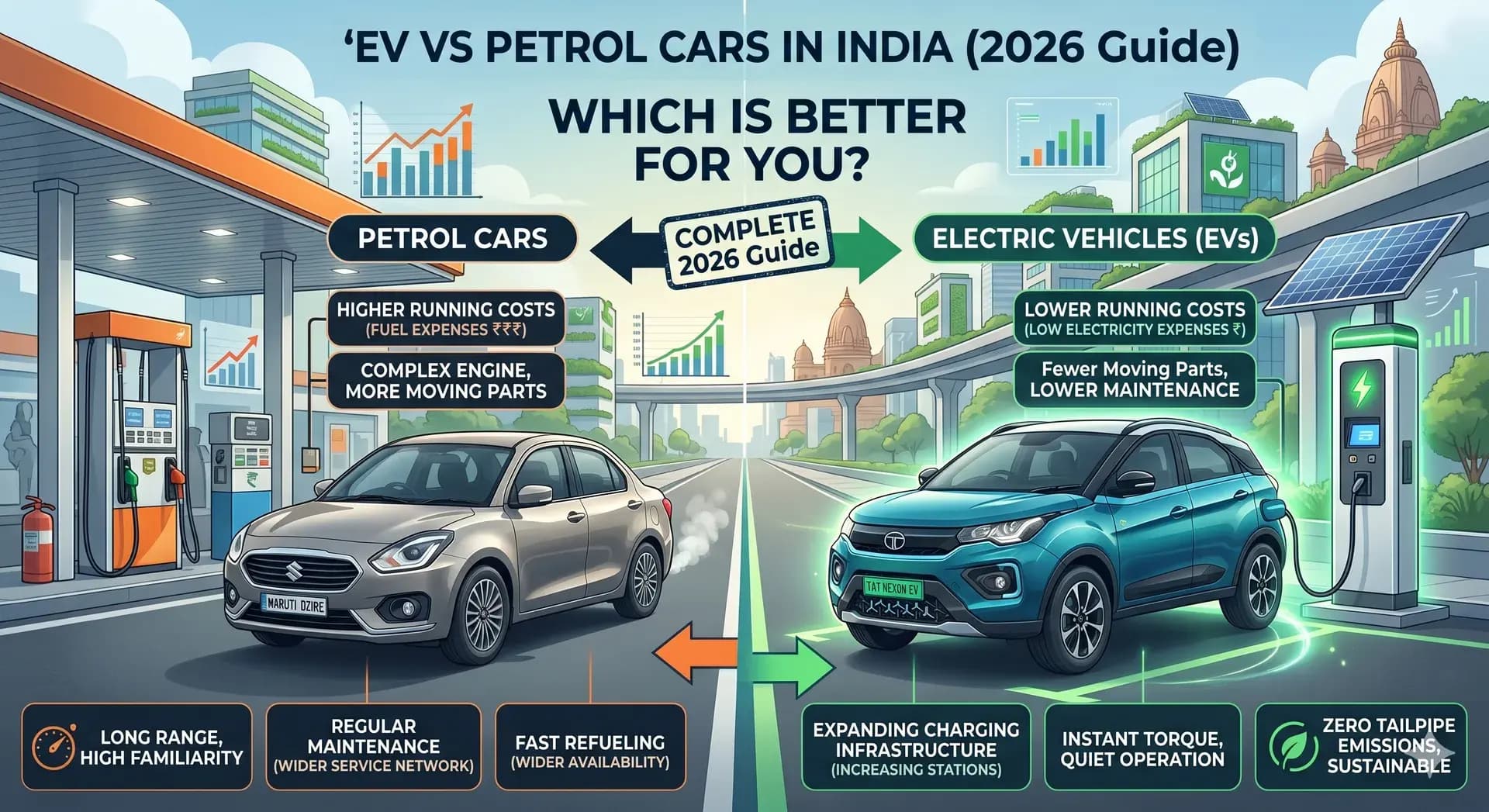
Electric Vehicles2026 guide
EV vs Petrol Car in India (2026)Complete Comparison Guide
R
April 16, 2026•12 min read
Buying a car in India today is no longer just about choosing a brand or budget. The biggest decision many buyers face is: Should you go for an electric vehicle (EV) or a petrol car?
With rising fuel prices, improving EV infrastructure, and government support, EVs are becoming a serious alternative. But petrol cars still dominate in terms of convenience and familiarity.
This guide gives you a complete, practical comparison of EV vs petrol cars, helping you decide based on real-world usage—not just theory.
At the most basic level:
This difference impacts everything—from cost and maintenance to driving experience and long-term ownership.
Purchase Cost
Running Cost (Where EV Wins Big)
EV: ₹1–₹2 per km
Petrol: ₹6–₹8 per km
If you drive regularly, this difference becomes significant over time.
👉 Example:
If you drive 1,000 km/month:
EV cost: ₹1,500 approx
Petrol cost: ₹6,000+
That's a huge monthly saving.
Long-Term Ownership Cost
Result: Low maintenance
Result: Higher maintenance cost
EVs feel more modern and effortless, especially in traffic conditions.
This is where the biggest practical difference lies.
Petrol Car
Refueling time: 5 minutes
Fuel stations easily available
EV
Charging time: 30 minutes to 8+ hours
Requires planning
Read the detailed guide: EV charging time in India.
If sustainability matters to you, EV is the better choice.
EV Battery
Lifespan: 8–15 years
Gradual degradation
Petrol Engine
Lifespan: 10–15 years
Requires regular maintenance
Both are comparable in lifespan, but EVs require less upkeep.
Explore in detail: EV battery life guide.
City Driving
Highway Driving
Petrol cars are still more convenient for long trips, but EV infrastructure is improving rapidly.
Advantages
Disadvantages
Advantages
Disadvantages
EV is best for you if:
Petrol is better if:
There is no universal winner—it depends on your usage.
👉 Choose EV if:
You want long-term savings
Your usage is mostly city-based
You have charging access
👉 Choose Petrol if:
You need flexibility
You travel long distances often
You prefer convenience
The shift toward EVs is clearly happening in India, but petrol cars are still relevant.
EV = Future + savings
Petrol = Present + convenience
If your lifestyle supports EV usage, it is a smart long-term investment.
Make a smarter choice with these guides:
EV is cheaper in the long run due to lower running and maintenance costs.
EV is better for city driving while petrol cars are better for long-distance travel.
EVs can be used for long drives but require planning for charging stops.
You can save significant monthly fuel and maintenance costs depending on your usage.
Yes, if you have access to charging and regular driving needs.