
Electric Vehicles2026 guide
EV Battery Life in India (2026)How Long Do Electric Vehicle Batteries Actually Last?
R
April 16, 2026•11 min read
One of the biggest doubts people have before buying an electric vehicle is simple: "Will the battery last long enough?"
Since the battery is the most important and expensive part of an EV, this concern is completely valid. But the reality is very different from what many people assume.
In this guide, you will understand how long EV batteries last in India, how they degrade, what affects their life, and how you can make them last longer.
EV battery life does not mean the battery suddenly stops working after a certain time.
Instead, it means how long the battery can hold a good amount of charge efficiently.
Over time, every battery slowly loses its capacity. This is normal and happens in all devices—from smartphones to electric cars.
In real-world conditions, most EV batteries:
For most users, this means the battery will last through the full ownership cycle of the vehicle.
Battery degradation is a gradual process.
Here's how it typically works:
For example, if your EV originally gives 300 km range, after several years it may give around 240–260 km. The car still works normally—only the range changes.
EV batteries are made of lithium-ion cells. Over time, internal chemical changes reduce their ability to store energy.
This happens because of:
This is a slow and predictable process, not a sudden failure.
1. Charging Habits
How you charge your EV plays a big role.
Charging to 100% daily → More stress
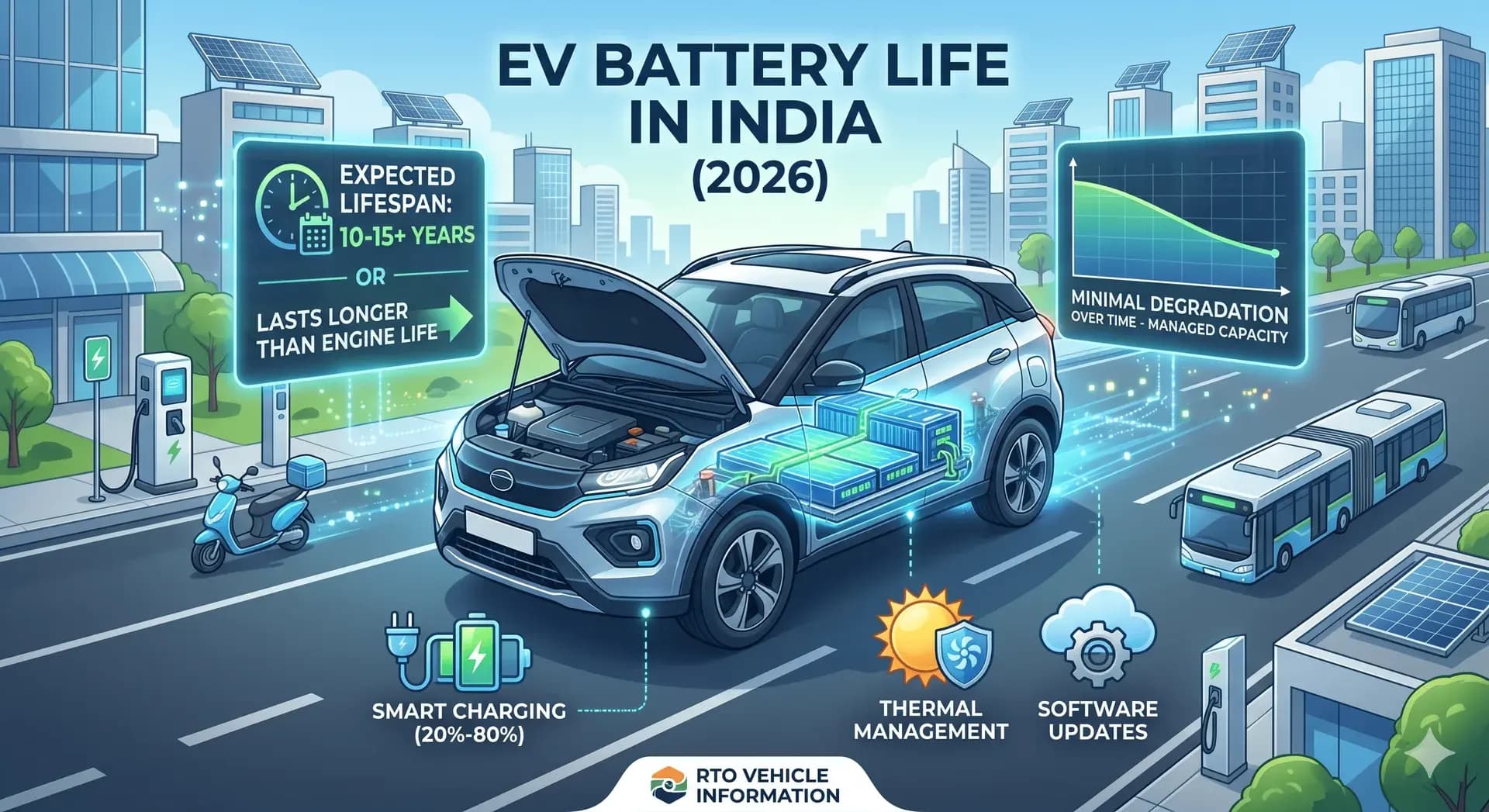
Keeping it between 20%–80% → Healthier
Read the EV charging time guide for charging behavior details.
2. Temperature (Important in India)
Heat is one of the biggest factors affecting battery life.
High temperatures → Faster wear
Moderate conditions → Better performance
Parking in shade or covered areas can make a difference over time.
3. Driving Style
Smooth driving → Less strain on battery
Aggressive driving → Faster energy drain
4. Fast Charging Usage
Fast charging is useful, but using it too frequently can increase long-term wear slightly.
Occasional use is perfectly fine.
5. Battery Technology
Modern EVs use improved battery systems that include:
These systems help maintain battery health automatically.
Most EV manufacturers provide:
This gives confidence that the battery will perform reliably for a long time.
Battery replacement is not something most users face early.
It usually happens when:
Check the EV battery replacement guide for process and cost.
Battery replacement is the most expensive part of EV ownership.
Approximate range:
However, these costs are gradually reducing as technology improves.
Simple habits can make a big difference:
These steps help maintain battery performance for longer.
In actual usage:
For typical city driving, battery life is rarely a problem.
| Aspect | EV Battery | Petrol Engine |
|---|---|---|
| Lifespan | 8–12+ years | 10–15 years |
| Maintenance | Low | High |
| Wear Type | Gradual | Mechanical |
EV batteries are now designed to match the lifespan of traditional engines.
For most buyers, the answer is No.
Because:
EV battery life is often misunderstood—it is not a short-term limitation anymore.
Battery technology is improving fast:
In the coming years, battery life will only improve further.
EV battery life is no longer a major concern for most users.
It lasts long enough for regular ownership
Performance reduces slowly, not suddenly
Proper usage can extend its life even more
If your daily usage supports EV driving, battery life should not stop you from switching.
Explore more battery and EV ownership guides:
Most EV batteries last around 8 to 12 years in normal conditions.
No, degradation is gradual and happens slowly over time.
Only after many years when battery performance drops significantly.
In some cases, specific parts of the battery can be repaired.
Frequent fast charging may slightly impact long-term health, but occasional use is fine.