
Electric Vehicles2026 guide
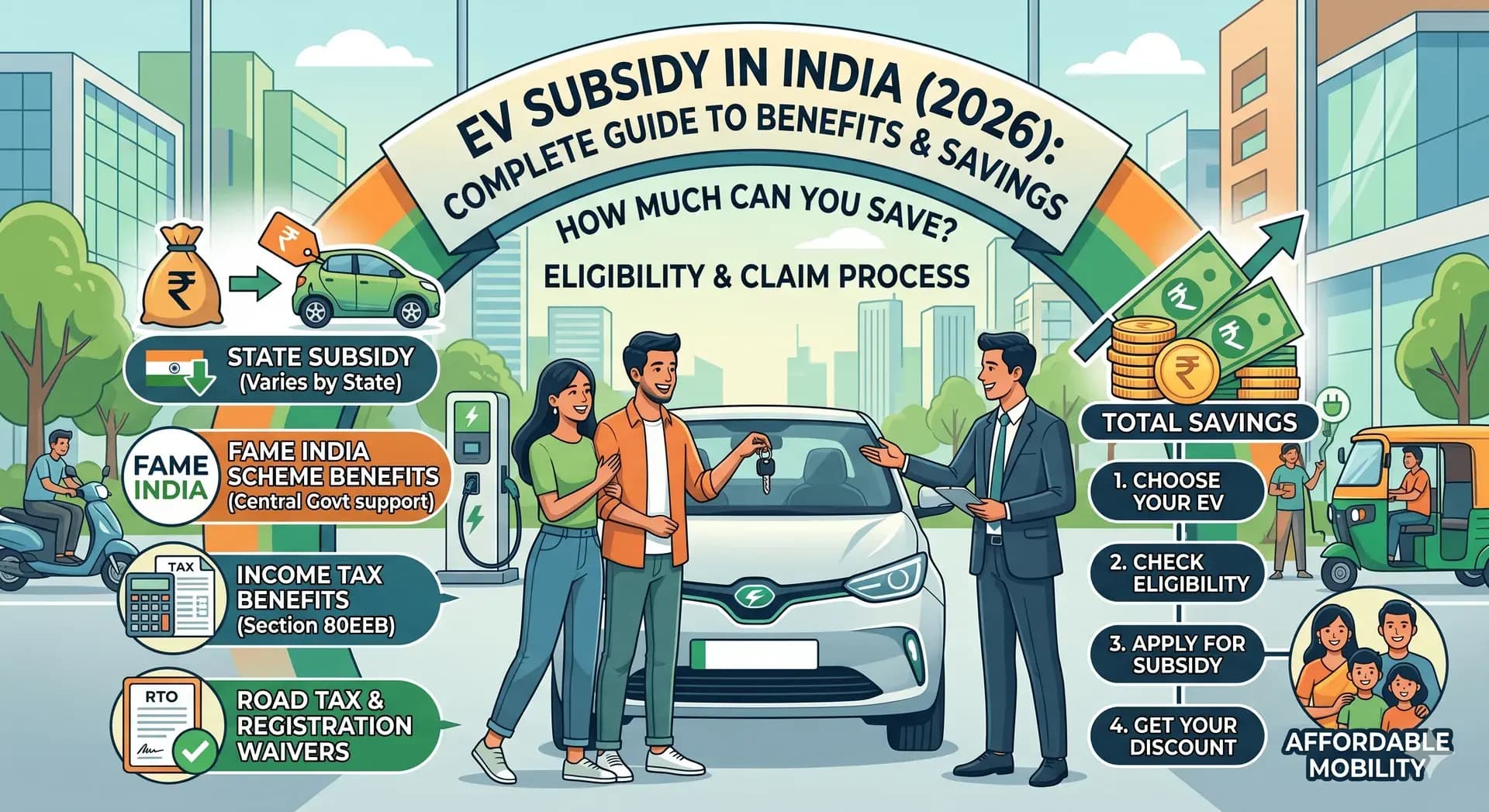
EV Subsidy in India (2026)Complete Guide to Government Benefits & Savings
R
April 16, 2026•12 min read
Electric vehicles are becoming more affordable in India, and one major reason behind this shift is government subsidy support.
If you are planning to buy an EV, one of the first questions you will have is: "How much subsidy can I get on an electric vehicle in India?"
The answer depends on multiple factors like vehicle type, state policy, and current government schemes.
In this guide, you will understand how EV subsidy works in India, how much you can save, eligibility rules, and how to claim it.
EV subsidy is a financial benefit provided by the government to make electric vehicles more affordable.
Instead of paying full price, buyers get:
In most cases, the subsidy is automatically adjusted in the vehicle price, so you do not need to claim it separately.
EV subsidies are mainly divided into two levels:
The central government provides incentives through national schemes to promote EV adoption.
Earlier, the FAME-II scheme supported EV buyers and helped subsidize over 16 lakh vehicles in India.
Now, support continues under newer programs like:
PM E-DRIVE scheme
Electric Mobility Promotion Scheme
This is where most actual savings for buyers come from.
Each state in India offers its own EV policy, which may include:
State benefits vary, so your savings depend heavily on where you register your vehicle.
The subsidy amount depends on the type of vehicle.
Electric Two-Wheelers
Subsidy available under central schemes
Additional state benefits
Total savings can be significant
Electric Cars
Limited central subsidy for private buyers
Major benefits come from state policies
Road tax and registration fee often waived
Electric Commercial Vehicles
Higher subsidies available
Encouraged for fleet and business use
EV subsidy is usually based on:
Earlier schemes offered incentives based on battery size, helping reduce vehicle cost significantly.
When you buy an EV in India, subsidy is not just one discount—it is a combination of benefits:
1. Purchase Discount
Direct reduction in vehicle price.
2. Road Tax Exemption
You may not need to pay road tax at all.
3. Registration Fee Waiver
One-time registration cost is reduced or removed.
4. Loan Benefits
Some schemes offer lower interest rates on EV loans.
All these combined reduce the on-road cost of the vehicle significantly.
EV loan guide for financing options.
Eligibility depends on certain conditions:
In most cases, if you are buying a new EV from an authorized dealer, eligibility is automatically checked.
The process is simple:
Step 1: Choose Eligible EV
Make sure the vehicle is approved under subsidy schemes.
Step 2: Dealer Applies Subsidy
In most cases, subsidy is applied directly by the dealer.
Step 3: Registration Process
State benefits (like road tax exemption) are applied during registration.
Step 4: Additional Claims (if required)
Some states may require online application for extra incentives.
Let's understand real impact:
Without subsidy:
Higher upfront cost
With subsidy:
Reduced purchase price
Lower registration cost
Lower overall ownership cost
This makes EVs much more affordable than they appear initially.
Subsidy is Limited
Some schemes are valid only for a certain time or number of vehicles.
State Matters the Most
Two people buying the same EV in different states may get different benefits.
Policy Changes Frequently
EV subsidy rules are updated regularly, so always check current policy before purchase.
Also see: EV subsidy pillar page · EV road tax
Subsidy is just one part of savings.
EVs also offer:
Explore complete advantages: EV benefits guide.
Yes, EV subsidy is still available in India.
Millions of EVs have already received incentives, showing strong policy support.
Subsidy is helpful—but it should not be the only reason.
You should consider:
Check total cost comparison: EV vs petrol car guide.
EV subsidy plays a major role in making electric vehicles affordable in India.
Reduces upfront cost
Encourages adoption
Makes EV ownership practical
However, the real benefit of EV comes from long-term savings and lower running cost, not just subsidy.
If you are planning to switch, this is a good time to take advantage of available incentives.
Maximize your EV savings with these guides:
It depends on vehicle type and state policy. Benefits vary across states.
Yes, government schemes and state policies still provide incentives.
In most cases, the dealer applies it automatically.
Commercial EVs and electric two-wheelers usually get higher incentives.
No, each state offers different benefits.